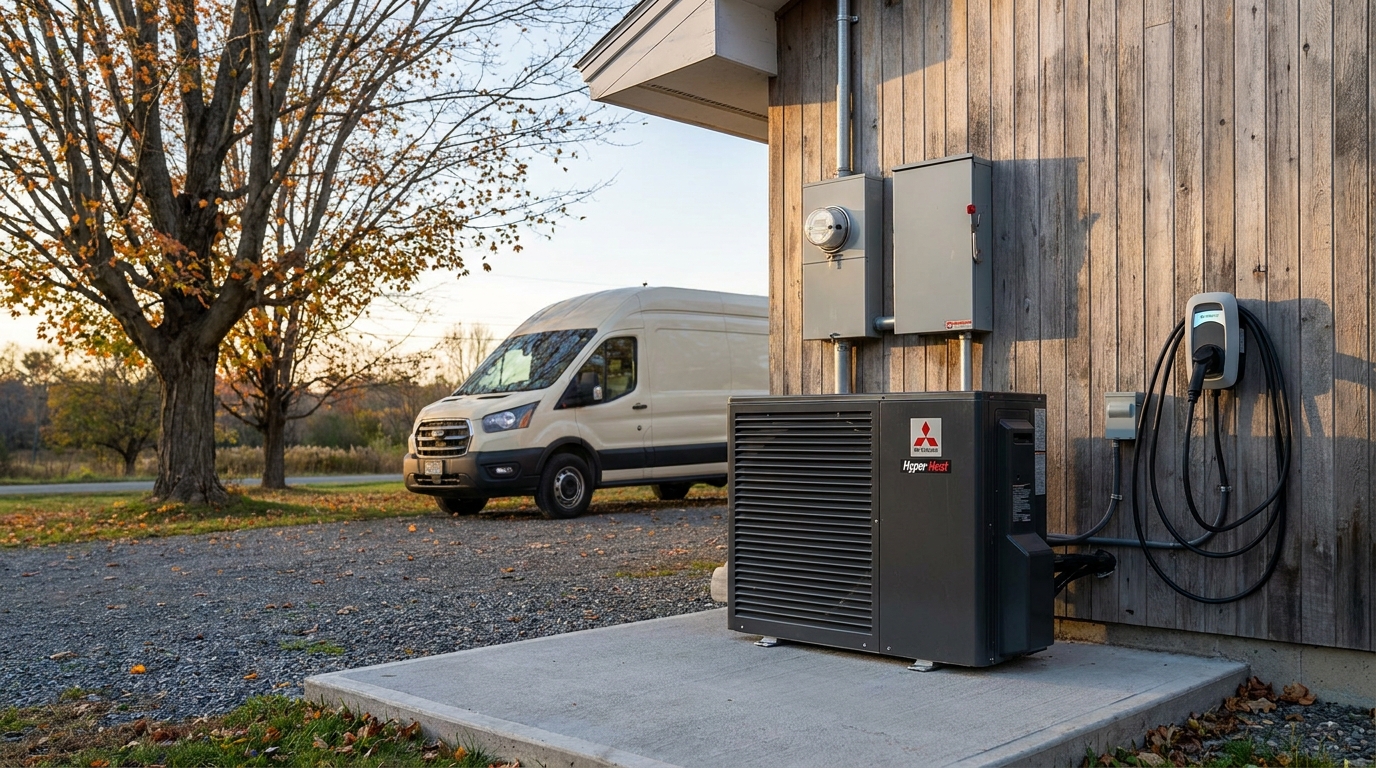
What we install. With model numbers, capacity, and COP data.
Voltline installs three brand families: Mitsubishi (Hyper-Heat PUZ-HA and MXZ-SM series), Fujitsu (Halcyon Extra Low Temp XLTH series), and Bosch (IDS Premium Connected). All three are cold-climate verified, all three have published performance data at design temperature, and all three are on the NEEP cold-climate qualified products list. We do not install rebranded budget-tier heat pumps because the cold-climate performance data on those units is either absent or thin.
What follows is the full install catalog with model numbers, capacity ranges, COP and HSPF2 specs in JetBrains Mono, and price ranges before rebates. Stacked rebates typically reduce the line below by $6,000–$14,000 — see the rebate walkthrough for full math.
Single-zone cold-climate ductless mini-split.
For one room or a small open-plan area — a sunroom, a finished bedroom, a primary living area without ductwork. One indoor head, one outdoor unit, a refrigerant line set between them. The fastest install we do: usually one day on site.
Most often this is the entry point into electrification. A homeowner wants air conditioning in the main living space, finds out a cold-climate mini-split also covers their shoulder-season heating load, and the math works.
The indoor head is wall-mounted, ceiling-cassette, or floor-mounted depending on the room. We discuss placement at the site visit because the placement matters.

Multi-zone cold-climate ductless mini-splits.
Two to five indoor heads from a single outdoor unit. The dominant install pattern for older Vermont homes where the ductwork was never installed (true of most Vermont housing stock pre-1990).
We zone by use. The kitchen / living area gets a larger head. Bedrooms get smaller heads. A second-floor wing gets its own. We do not install heads for the sake of installing heads — if a small bedroom doesn't need its own zone, it doesn't get one.
Multi-zone installs are usually 1–2 days on site, depending on the line-set routing complexity.
Cold-climate ducted heat pump (full-system replacement).
For homes with existing forced-air infrastructure that is in usable condition. The existing furnace is removed and replaced with a cold-climate variable-speed heat pump and a matched air handler. The ductwork stays, after we verify it with a static-pressure test and seal any leakage.
This is not a "hybrid" install. The fossil-fuel equipment leaves the property. The entire heating load goes onto the electrical service.
We size the system using Manual J load calc on the actual envelope — not a rule-of-thumb based on the existing furnace's nameplate. Most of the time the heat pump is right-sized smaller than the old furnace was.
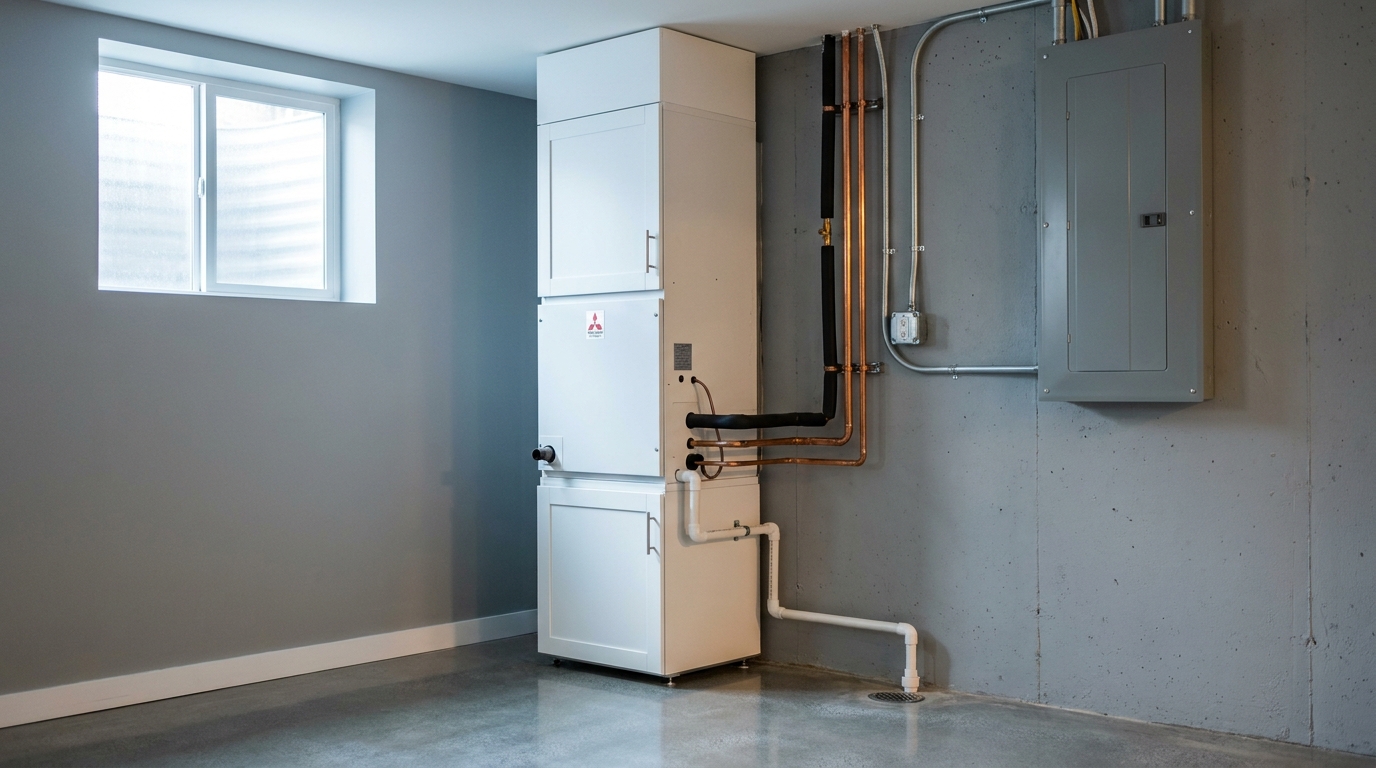
Cold-climate heat pump + electric backup.
For the coldest pockets of our service area — Underhill, Bolton, Smugglers' Notch corridor, parts of the Northeast Kingdom we serve by quote. Anywhere with a Manual J design temperature below −15°F.
The configuration is a cold-climate heat pump (PUZ-HA48 or PUZ-HA60 territory) plus a 10–20 kW electric resistance strip integrated into the air handler. The strip runs only when the outdoor temperature drops below a controller setpoint and only for as long as the heat pump cannot keep up — usually a few hours a year, not a few days.
This is still an all-electric system. The strip is electric. The whole heating load is on the electrical service. No fossil-fuel pieces.
Whole-home electrification retrofit.
The package: a cold-climate heat pump + heat-pump water heater + 200A electrical panel upgrade (through our partner electricians at Stowe Electrical) + induction-cooktop pre-wire + EV-charger pre-wire. The whole house comes off fossil fuels in one coordinated project.
We sequence this over 6 to 18 months as your budget allows. Phase 1 is the audit and plan. Phase 2 is the heat pump and panel upgrade. Phase 3 is the water heater. Phase 4 is the induction and EV pre-wires (which set you up to add those appliances later without re-opening walls).
Most of our highest-margin work is here, because every phase touches the rebate stack and the rebates compound. We treat these jobs as a relationship, not a transaction.